THE COFFEE CLUB: THE CLUB FOR EVERYONE

Updated: Sep 1
Campaign case studyt overview:
Industry | Food and Beverage |
Published date | August 31st, 2026 |
Affiliation | None/Independent research |
Key words | Cold brew, Coffee, Brunch, The Coffee Club |
1. Situation: Australia foodstuff consumption
Coffee has long been regarded as an indispensable part of Aussie life. A survey from the Australian Bureau of Statistic indicated that coffee substitute is consumed by 61.5% of Australians over the age of 18, with 62.7% of males slightly prefer coffee than females with 60.3%. After “Your Happy Place”, the Coffee Club has now commenced with a new appeal - the Club for Everyone. Launching from July 14th in Instagram, the brand has freshly restarted its image from reconciling the quarantine loneliness with happiness to their newer by appealing as a friendlier, more energetic and enthusiastic club
2. Consumer profile
THE OVERVIEW:
a small family, they also have their children. Therefore, this made the interaction necessary to help them regain social activity. The elderly loneliness is also considered within the campaign. As they are mostly at rest, exclusively sedentary activities require less working activities. Therefore, this creates the need for more energetic engagements to strengthen their happiness.
THE DETAIL:
Their need is primarily in the third stage of the Maslow hierarchy for love, social connection and gathering. This is the primary factor that drove Aussies to coffee shops. This is because their need and want have been motivated from the functional meaning of viewing cafes far more than a place to drink but to also consume. In addition, it is also paired with a symbolic association of cafes as a place of gathering, having fun and enjoying the weekend and a hedonic need to enjoy the happy place with memorable family gatherings.
To pursue their needs, these consumer goals are strongly promotional focused as they want to have a happy place to gather for social settings. Therefore, they can also have their goal of easing and preventing the conflict trigger, the loneliness after the disease. This is because their value of connection strongly promotes connection, gathering and joy. The self-concept is grounded on authentic self while driven by the ideal self of them having family gathering. In addition to this, they are also driven by ought to be laid in their daily struggle
3. Brand delivery:
Instagram:
In general, the repositioning campaign has utilized the unique appearance. Starting with social activity from Instagram, it had maximized the customer exposure of sight and sound using a completely dark-white background to start the advertisement. This eyesight when using the Gelstalt visual rules can command the audience’s eyesight by using the central positioning of the font and especially in the second post (see below) where the separation of coffee and club with the lower roundtable “and friend” phase encourage the followers to remember the smile. In addition to this the flag separating them symbolized the brand's long term existence.
The black appeal is also effective for food and beverage brands. By using this color, the brand can command the initial user experience by creating the absolutely different visual appeal that is common among food and beverage brands. In most feed, food and beverage brands usually record its users to encourage the sense of opening to their consumer showing their consistent commitment to their openness. However, by introducing a dark background. consumers have long conditioned to respond to the close of the door room, the dark introduction of cinema to a new film. This results in consumers viewing the brand as a reliable and friendly companion to the customer with constant consumer-centric renewal while allowing the Coffee Club to spend times on preparing for the newer campaign.

(Social media release of the campaign: Accessed 31 August 2026)
However, the brand later opens its door with more colorful appeal. This creates a more positive association by reinforcing consumers' earlier promotional goal of connection in the social setting of coffee shops. While the position itself is not the most unique in the public appeal, it creates a strong link between the brand and the consumer awareness of happiness. The schema from the scene is also in activation with the high price - quality display of food product with crispy french fries, croissant as well as the colourful appeal of the brunch.
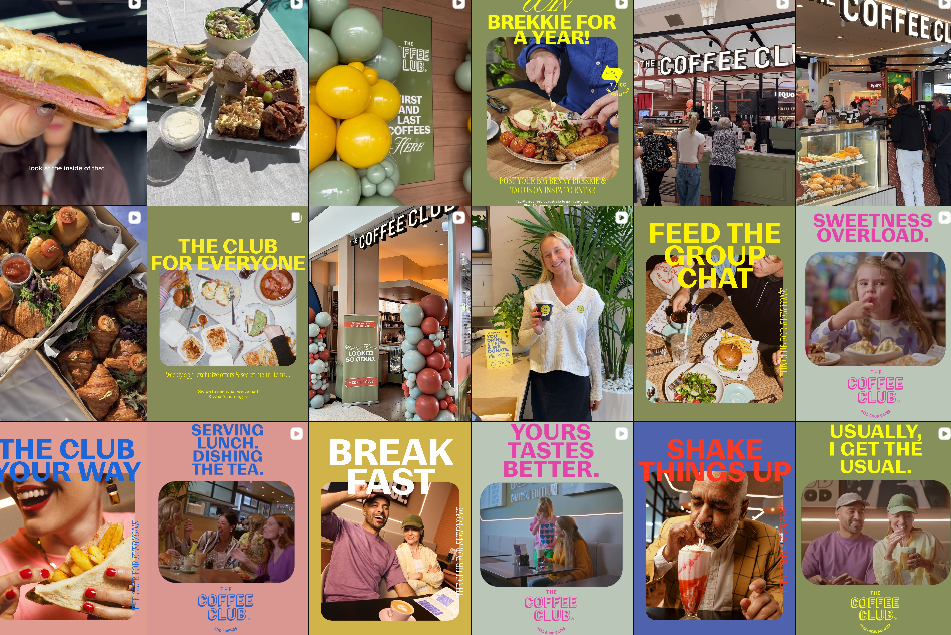
(Social media release of the campaign: Accessed 31 August 2026)
Website positioning:
Understanding the indispensability of cafes in Australia beverage culture, the Coffee Club has already used their strong establishment status. Starting from 1989 in Brisbane, the brand has already placed themselves in the land creating coffee culture (Corporate Coffee Solution n.d.). This creates the direct credibility for By framing the given experience to the consumer throughout the cheer up of the bad day incidence, the brand has positioned itself to deliver a cup of coffee as a solution to ease the feeling.
(Website release of the campaign: Accessed 31 August 2026)
4. Brand extension recommendation:
Market ability:
August searches from Google Trends show the increasing search for Cold Brew near me increasing to 110% when the Australia weather has become increasingly warmer (Google Trends 2026). This opens the new opportunity for the brand to create a heater image of the Coffee Clubs to wait for the summer. As Cold brew is the combination of coffee with the large ice and cold-water
attribution, it creates a fresh start for the brand to their summer
Positioning Strategy:
The brand should position itself as a cool gathering shop to help the customer smoothly adapt the cooler to the hot summer. This will make the consumer soon acquire this new message in the social media as it will synchronize their cognitive with the newly emerging spring. To execute this the brand should consider applying the warmer tone of color including warmer red, purple, and slighter blue to apply the new changes
5. Reference
Daniel Woods, How many Australians actually drink coffee? - BeanScene, accessed 1 September 2026
The Coffee Club, Our Story – The Coffee Club Australia, accessed 31 August 2026
Corporate Coffee Solutions, The Evolution Of Coffee Culture, Corporate Coffee Solution blog post, accessed 31 August 2026
Google Trends, Latest trends on Food and Beverage in Australia, accessed 31 August 2026
Available report:
Downloadable version will be soon available


Comments